
Best places in Spain to see the 2026 solar eclipse

A total solar eclipse is on the cards for 12 August 2026 and will reach totality close to sunset in Spain. If you’ll be in the country and plan on getting a front-row seat for this spectacular event, choosing the right viewing spot could make all the difference.

Why location matters
According to NASA, the eclipse will begin in Spain at around 7:30 pm local time, with the total eclipse happening between roughly 8:27 pm and 8:33 pm, depending on where you are.
In western locations like A Coruña, the sun will still sit higher above the horizon, giving you more room to see it. But in eastern Spain and the Balearic Islands, the eclipse happens much closer to sunset, making a clear, open view towards the west essential.
Key things to consider for the best views
- Do you have a clear view to the west without hills, trees or buildings in the way?
- Is your viewing spot likely to be crowded?
- Is there a backup spot nearby?
- Can you reach and leave the location safely and comfortably?
Where to watch the 2026 solar eclipse in Spain

Burgos and Palencia
Burgos and Palencia are in Castilla y León, in northern Spain, sitting inland on the broad, open plains that make both locations prime viewing spots. Here the total eclipse is expected at around 8:29 pm, with totality lasting about 1 minute 44 seconds in Burgos and 1 minute 42 seconds in Palencia.
Burgos is a beautiful city to build a few days around. Its Gothic cathedral is one of Spain’s great landmarks, and the old town is ideal for slow wandering and tapas stops. Palencia is quieter, but that’s part of its charm. Think elegant streets, Romanesque churches, and relaxed riverside walks.
Top tip: Much of inland Spain, including parts of Castilla y León, has better odds than the northern coast for clear or lightly cloudy skies in mid-August, which ups your chances of seeing the full eclipse.

Valladolid
Valladolid is a top choice if you want to see the eclipse without giving up the ease of a city break. Located in north-western Spain, it sits within the path of totality, with the total eclipse expected at around 8:30 pm and lasting roughly 1 minute 30 seconds.
Valladolid is packed with historic churches, museums and plenty of places to settle in for a glass of local Ribera del Duero. It’s also close to some of Spain’s wine country, so if your idea of dreaming big includes a vineyard visit, this could be your spot.

Zaragoza and the Ebro Valley
Zaragoza is in north-eastern Spain and lies in the Ebro Valley, which normally has clear skies in August, making it a great spot for sun gazing. The eclipse will peak at around 8:29 pm in the city centre, with totality lasting roughly 1 minute 20 seconds. For a clearer horizon, it may be worth finding a viewing spot outside the city in the wider Ebro Valley.
After marvelling at the western horizon, Zaragoza will give you plenty to enjoy. The Basilica del Pilar is a showstopper, the riverside is perfect for an evening stroll, and the Aljafería Palace brings a brilliant dose of Moorish history.

Majorca
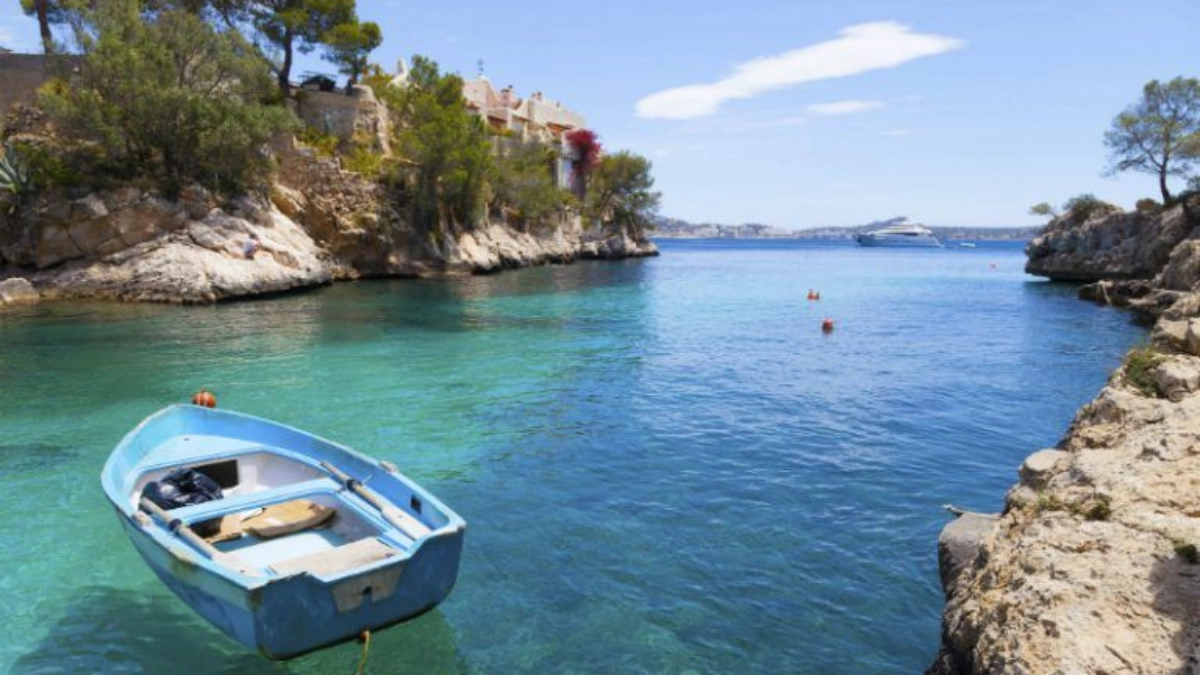
Majorca could be one of the most spectacular places to watch the 2026 total solar eclipse if you choose your spot carefully. Located in Spain’s Balearic Islands, you can enjoy scenic coastal views, explore mountain villages and sandy coves or take scenic drives through the Serra de Tramuntana.
Totality is expected at around 8:32 pm, lasting roughly 1 minute 36 seconds. But here’s the catch: the sun will only be around 2.5° above the horizon during totality. That is very low. Even a small hill, hotel, tree line or patch of sea haze could block the view.
For a stronger viewpoint, adventurous travellers could look at Mirador de la Trapa, near Sant Elm on the island’s south-west coast. This elevated viewpoint looks out towards Sa Dragonera and the open western horizon, which makes it a great place to watch the eclipse if conditions are clear.

Valencia
Set on Spain’s eastern Mediterranean coast, Valencia should be on your radar if you want your eclipse trip to include golden beaches, orange-tree-lined streets, historic old-town squares and delectable cuisine. It sits within the path of totality, with the total eclipse expected at around 8:33 pm and lasting roughly 1 minute.
But there’s one important thing to note. The sun will be very low in the west-northwest during totality, with sunset not long after. That means buildings, trees, haze or even a slightly raised horizon could steal the show. So, while Valencia is a fantastic travel base, you’ll need to be extra picky about where you watch from.
What to pack for eclipse day
Ordinary sunglasses won’t protect your eyes, so certified eclipse glasses are essential. And if you’re using a camera or binoculars, make sure they have the right solar filter. You’ll also want water, snacks, sun cream, a hat and lightweight layers, especially if you’re arriving early to hold a good spot.
A folding chair or picnic blanket can make the wait more comfortable, while a portable phone charger will help keep maps and emergency contacts close to hand. If you’re heading somewhere remote and planning to stay after sunset, pack a small torch, any medication you need, and printed copies of your hotel and travel insurance details.
Travel with confidence
If you want to make the 2026 total solar eclipse your greatest adventure yet, we’d love to tag along. Our Spain travel insurance can help keep you protected from the unexpected with cover for pre-existing medical conditions and all ages, emergency medical treatment, repatriation, trip cancellations, lost baggage, and more.